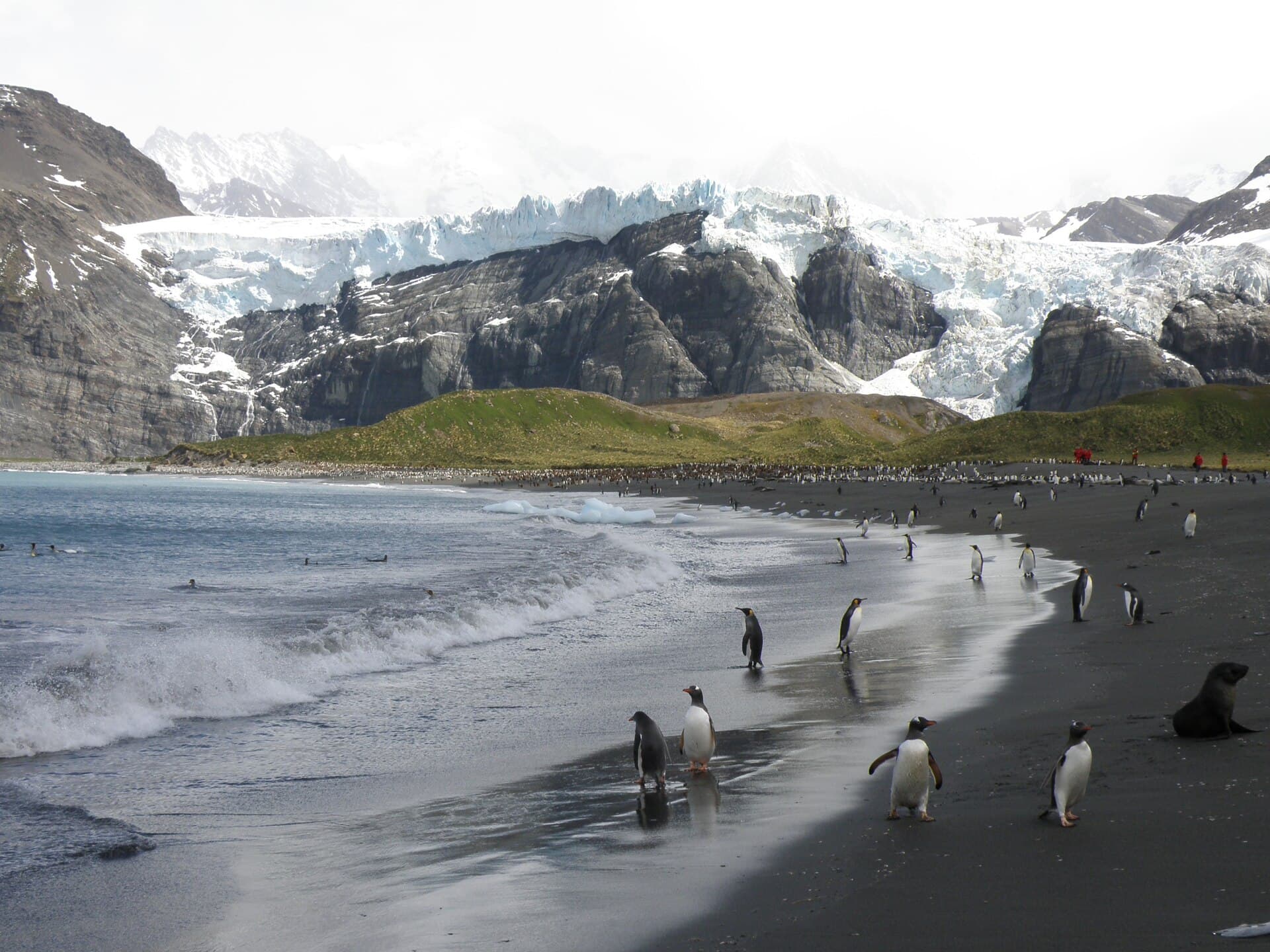
Photo: Hannes Grobe, Alfred Wegener Institute · CC BY-SA 2.5
EXPEDITIONDemo
Antarctica Ross Sea Expedition Voyage
Ross Sea, Antarctica · Antarctica
Moderate22 daysAntarctica~£25,000 est.
Overview
Sail south from New Zealand across the full breadth of the Southern Ocean — days of open water through the furious fifties and screaming sixties — then push through the pack ice into the Ross Sea, the most remote and least visited quarter of Antarctica. Fewer than a thousand tourists reach it in a good year. The prizes are extraordinary: Scott's Terra Nova hut at Cape Evans and Shackleton's Nimrod hut at Cape Royds, preserved intact in the freeze since the heroic age; the smoking summit of Mount Erebus, the world's southernmost active volcano; Adélie and emperor penguin colonies; and the ice front of the Ross Ice Shelf running unbroken to the horizon. Everything here is ice-dependent. Zodiac and helicopter landings — including, on the best voyages, the McMurdo Dry Valleys, where wind-scoured rock has been essentially rain-free for around two million years — happen only when leads open and the weather allows, so a flexible attitude matters as much as warm boots. January and February, when the sea ice is at its minimum, are the only realistic window. This is a serious commitment of time and money: three weeks or more from Invercargill or Hobart and upwards of £25,000 for the voyage before you reach New Zealand. Seasickness medication is not optional.
Book This Trip
Plan Your Dates
Prefilled for 1 January 2027 — the next best-season window. Search on partner sites — opens in a new tab.